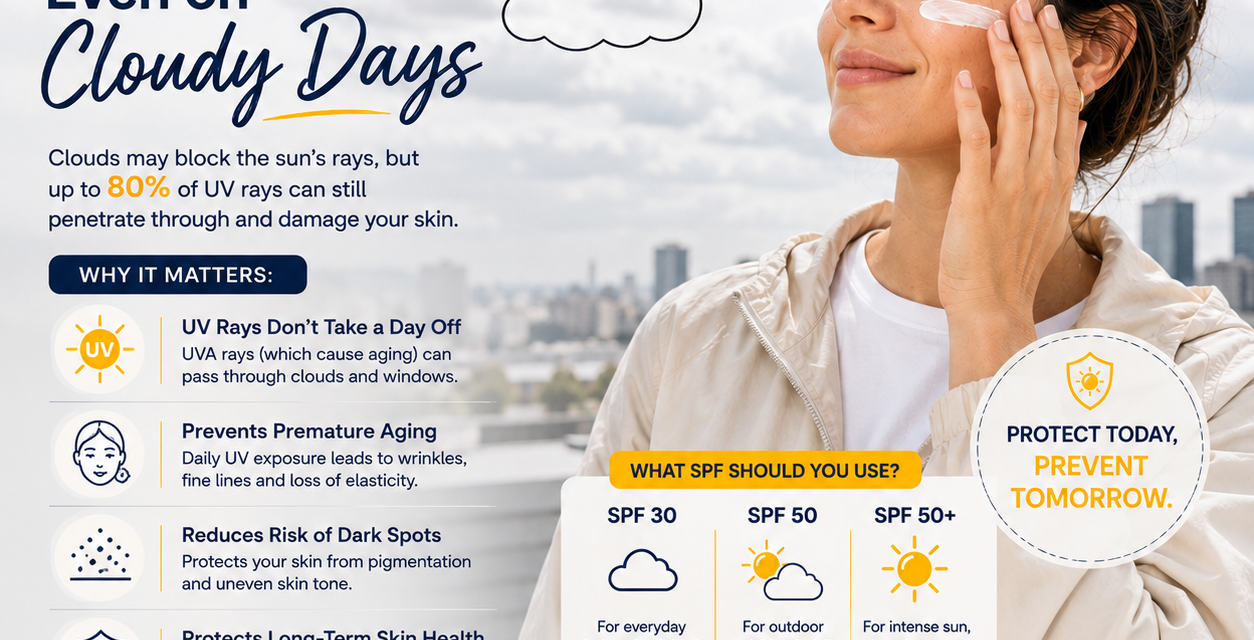
When the sky is grey and the sun is hidden behind clouds, it can be easy to assume that sunscreen is no longer necessary. However, your skin can still be exposed to ultraviolet (UV) radiation on cloudy days. In fact, making sunscreen part of your everyday skincare routine—regardless of the weather—is one of the simplest ways to protect your skin and maintain a healthy, youthful appearance.
Can You Still Get UV Exposure on a Cloudy Day?
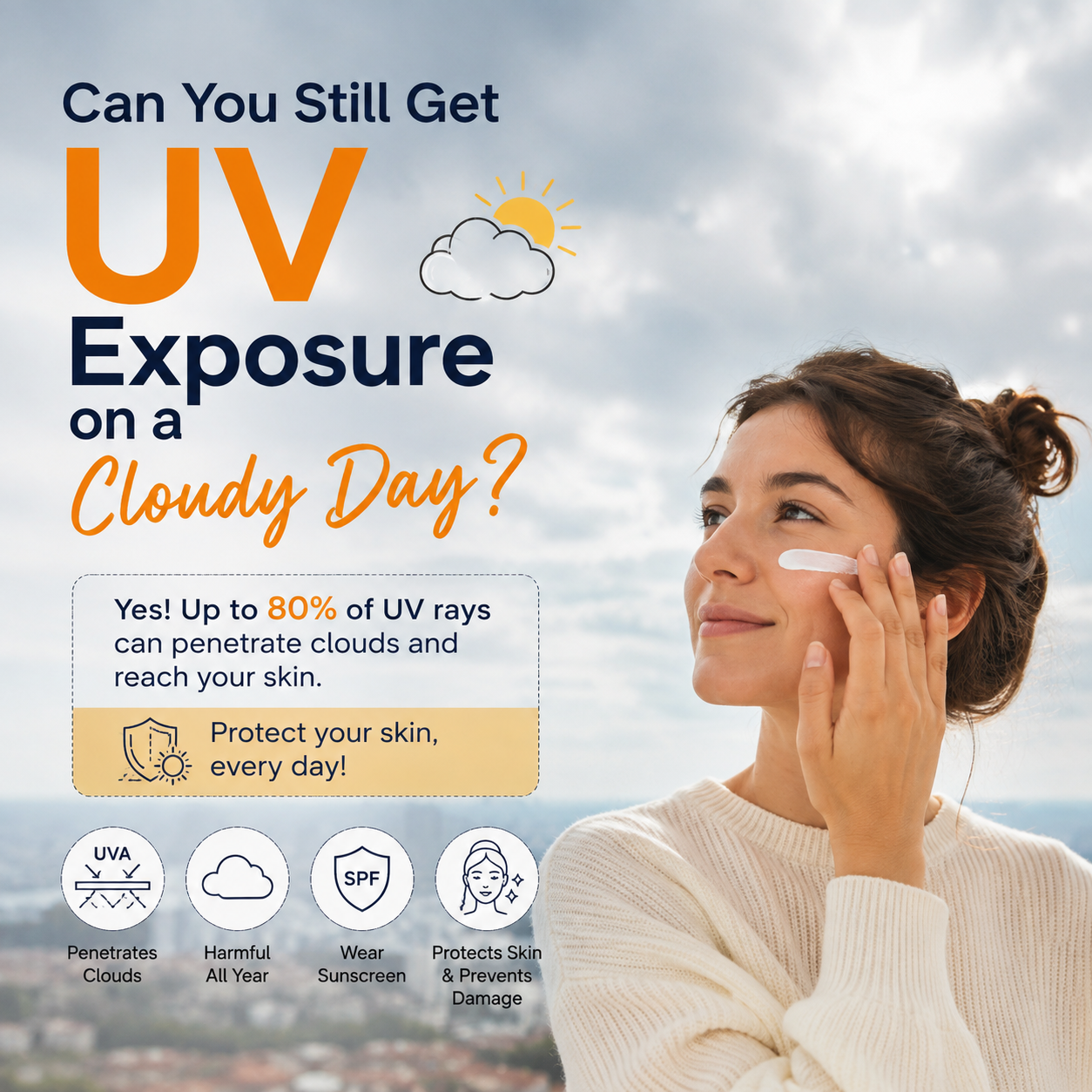
Yes. Clouds can reduce the amount of sunlight that reaches the ground, but they do not completely block UV radiation. UVA rays, in particular, can pass through clouds and reach your skin.
UVA exposure is associated with premature skin ageing, including fine lines, wrinkles, uneven skin tone and loss of skin elasticity. UVB rays are the main cause of sunburn, and their intensity can vary depending on the weather, season, location and time of day.
This is why cloudy weather should not be considered a “no sunscreen” day.
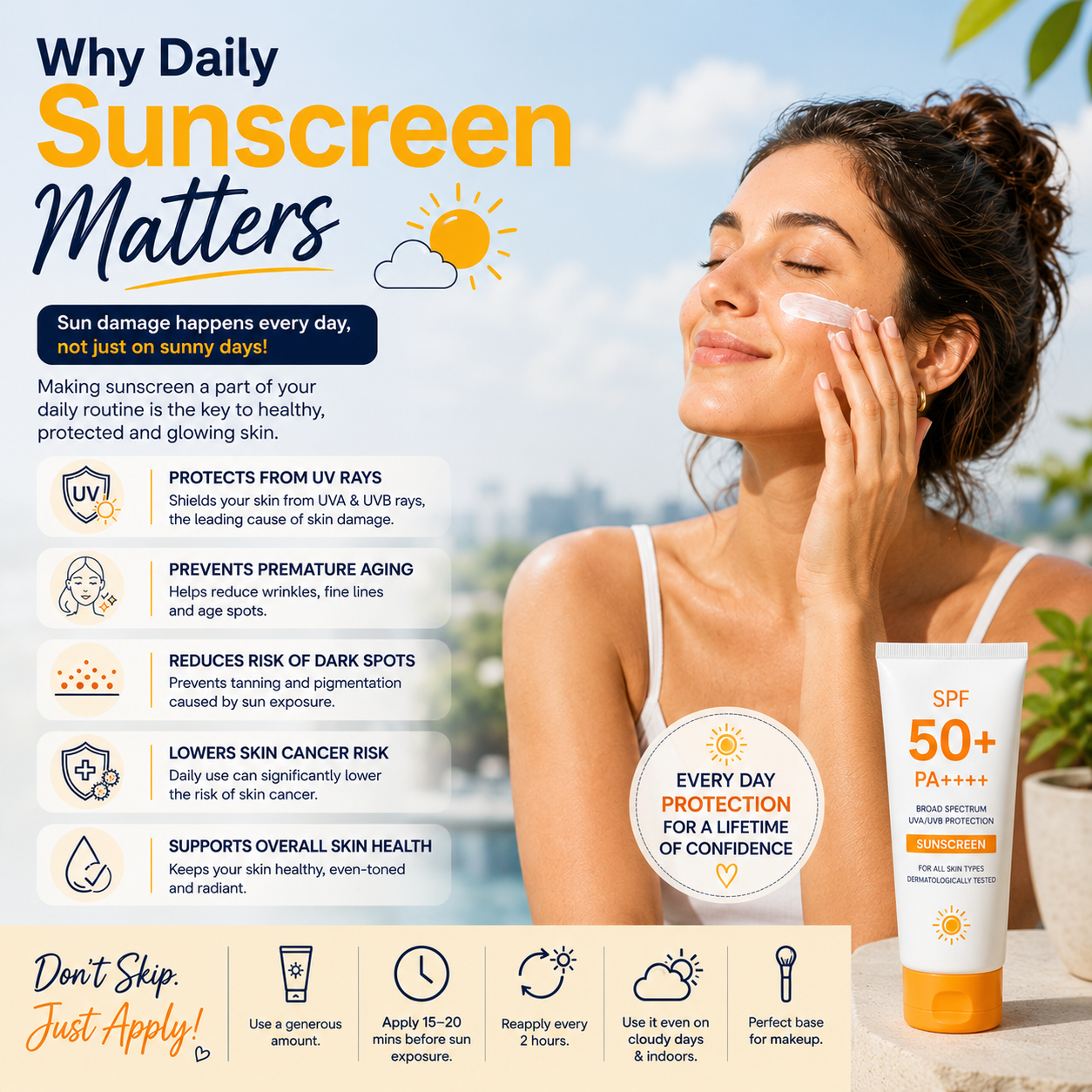
Why Daily Sunscreen Matters
1. It Helps Protect Against Premature Ageing
Repeated UV exposure can contribute to visible signs of ageing. Fine lines, wrinkles, pigmentation and uneven skin tone can become more noticeable over time.
Using sunscreen regularly helps reduce your skin’s exposure to UV radiation and supports a more youthful-looking complexion.
2. It Helps Prevent Uneven Skin Tone
Sun exposure can stimulate melanin production, which may contribute to dark spots and pigmentation. If you are already dealing with uneven skin tone, consistent sun protection can be an important part of your skincare routine.
3. UV Rays Can Reach You During Everyday Activities
You do not need to spend hours at the beach to experience UV exposure. Walking to work, driving, sitting near windows or spending time outdoors can all contribute to your overall UV exposure.
Daily sunscreen is therefore about protecting your skin during ordinary activities, not just during summer holidays.
4. Clouds Don’t Mean Zero UV
A cloudy day may feel cooler because clouds reduce visible sunlight and heat, but cooler temperatures do not necessarily mean that UV exposure has disappeared.
This is one reason why relying on how hot or sunny it feels can be misleading when deciding whether you need sun protection.
What SPF Should You Use?
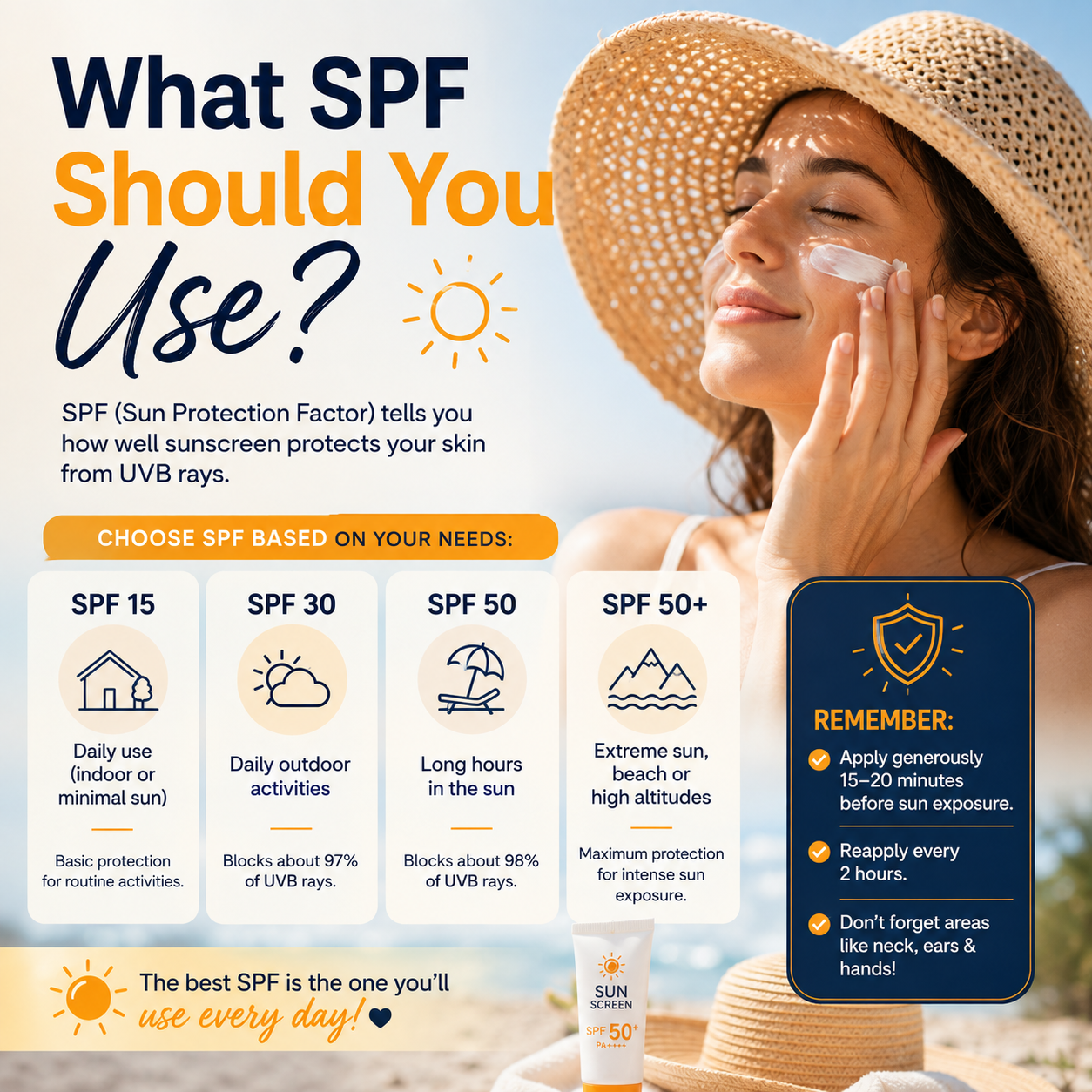
For everyday use, choose a broad-spectrum sunscreen with SPF 30 or higher. Broad-spectrum protection helps protect your skin from both UVA and UVB radiation.
Apply sunscreen as the final step of your morning skincare routine, after moisturiser and before makeup. Remember to apply enough product to adequately cover exposed areas such as your face, neck and ears.
If you are spending extended time outdoors, sweating or swimming, sunscreen may need to be reapplied according to the product instructions.
Don’t Forget These Often-Missed Areas
When applying sunscreen, people often focus only on their face. However, other exposed areas can also receive UV radiation.
Pay attention to:
- Neck and décolletage
- Ears
- Hands
- Forehead and hairline
- Around the eyes, while avoiding direct contact with the eyes
- Any other exposed skin
A consistent routine makes sun protection easier to maintain throughout the year.
Sunscreen Is an Everyday Skincare Essential
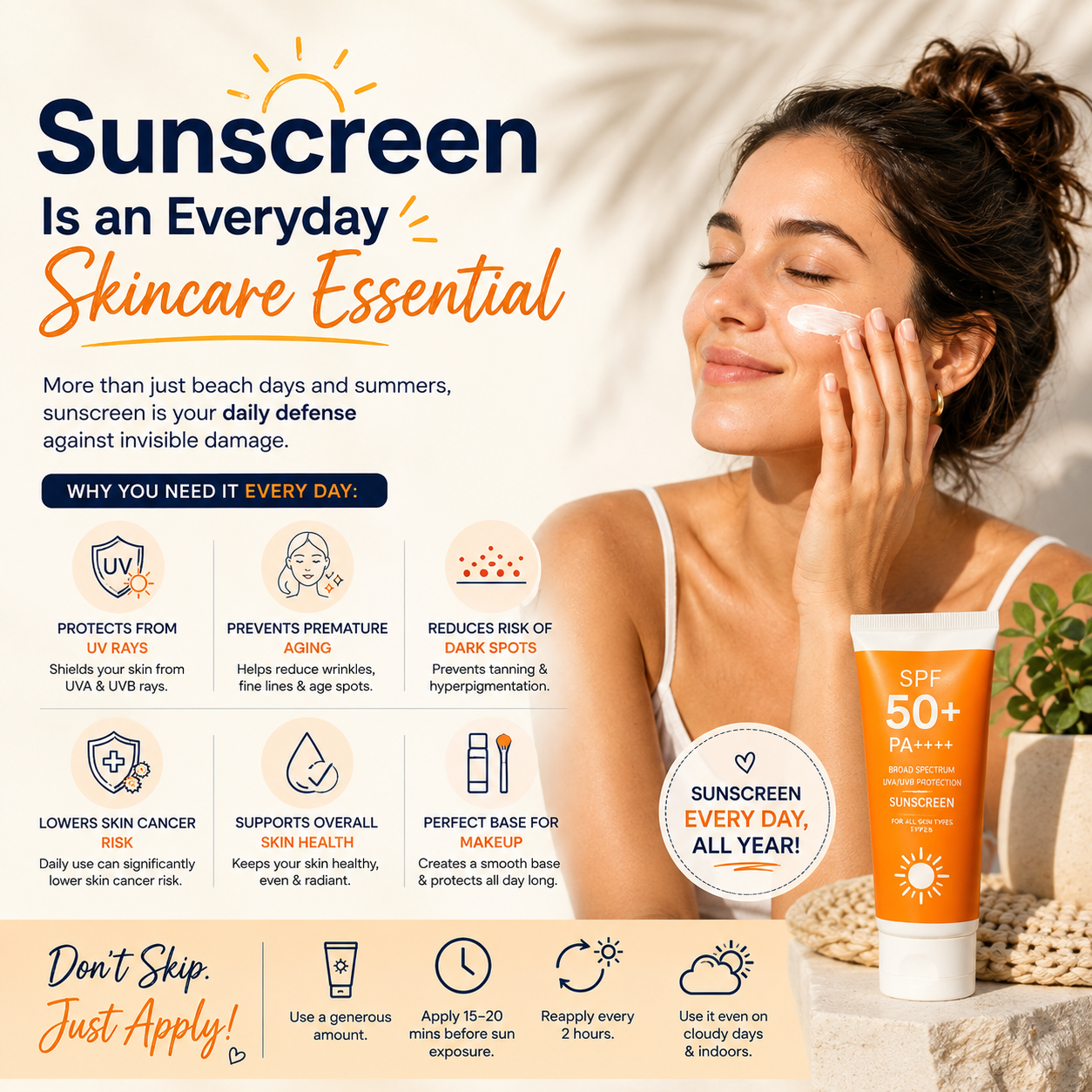
Healthy-looking skin is not only about serums, moisturisers and treatments. Protecting your skin from environmental factors is equally important.
Whether the day is bright and sunny, cool and cloudy, or somewhere in between, UV exposure can still occur. Making sunscreen a daily habit can help support your skin’s long-term appearance and complement the rest of your beauty routine.
At Hera Grace, we believe beautiful skin starts with good everyday habits. Don’t wait for a sunny day to protect your skin—make sunscreen an essential part of your morning routine.
Protect your skin today for healthier-looking skin tomorrow.